History &
Architecture
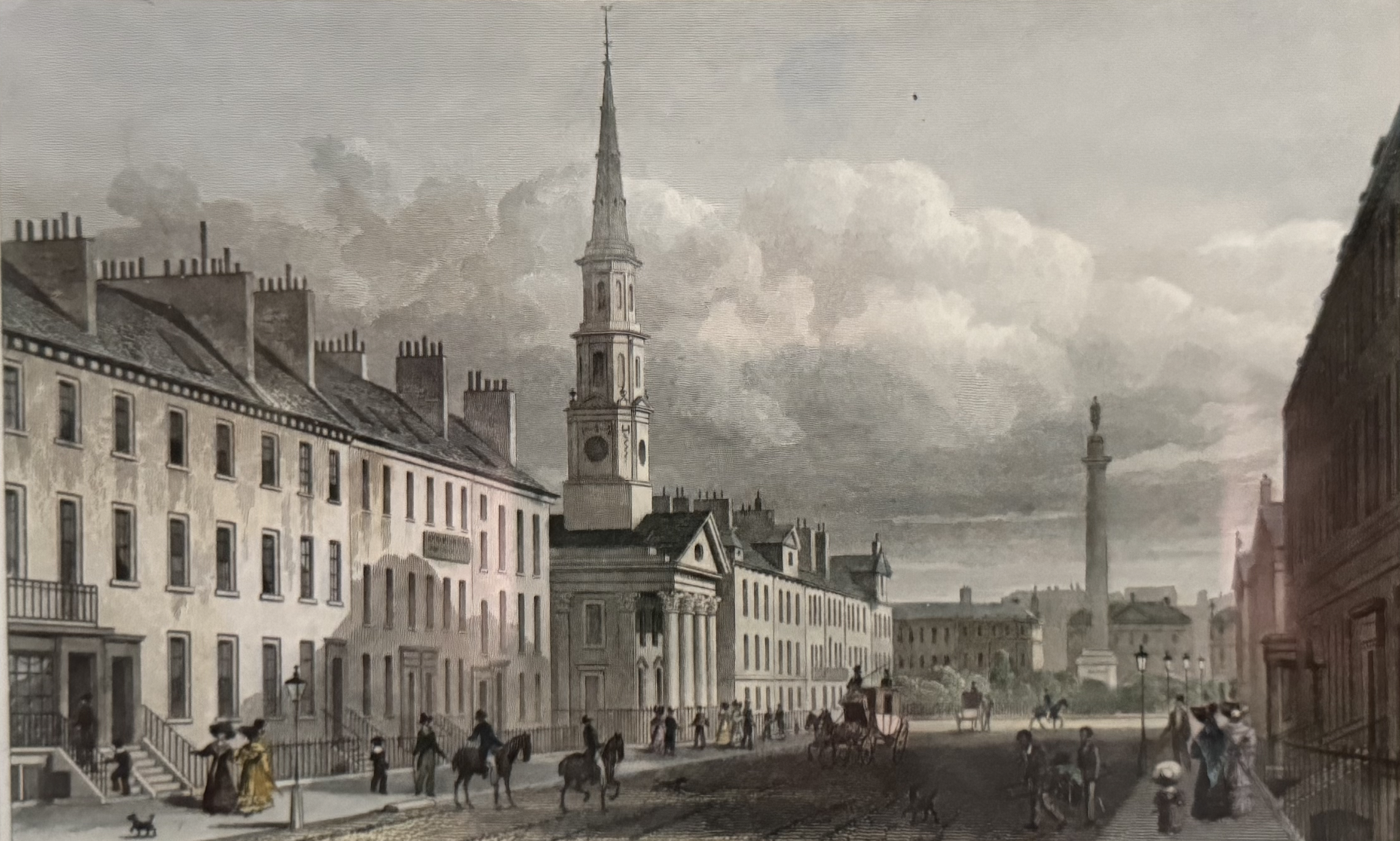
Key moments in the history of Edinburgh New Town Church, alongside some of the distinctive architectural features of our building.
1784
A Church in the New Town
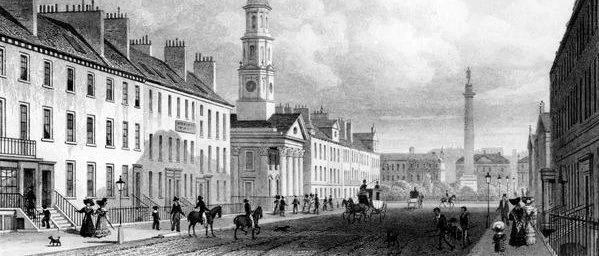
When the ‘New Town’ for Edinburgh was being created in the late 1700s, the City Council knew that churches would be needed for the national, Presbyterian, church and the proposals showed two sites. One was on the west side of Charlotte Square (to become St George’s), the other was on the east side of St Andrew Square and both would terminate views on the main axis of George Street.
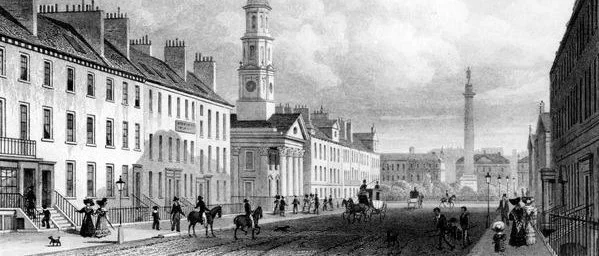
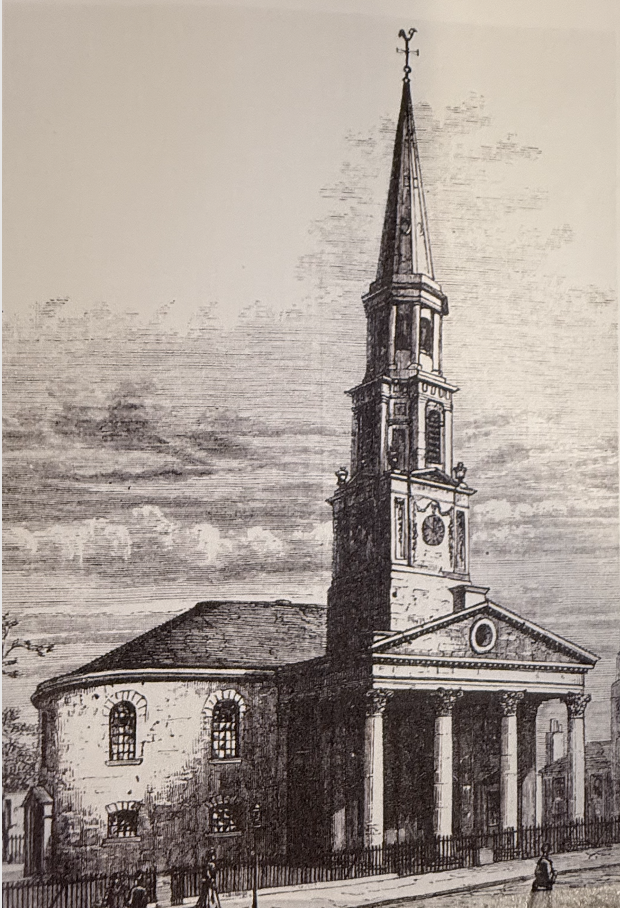
However, Sir Lawrence Dundas, who had made his wealth in India, managed to acquire the St Andrew Square site for himself; so the present site on George Street was purchased and the Church (called St Andrew’s) was built in 1784.
Annoying at the time, the change means that, today, the Church has a very prominent place in the active city centre.
1843
A Moment of Change
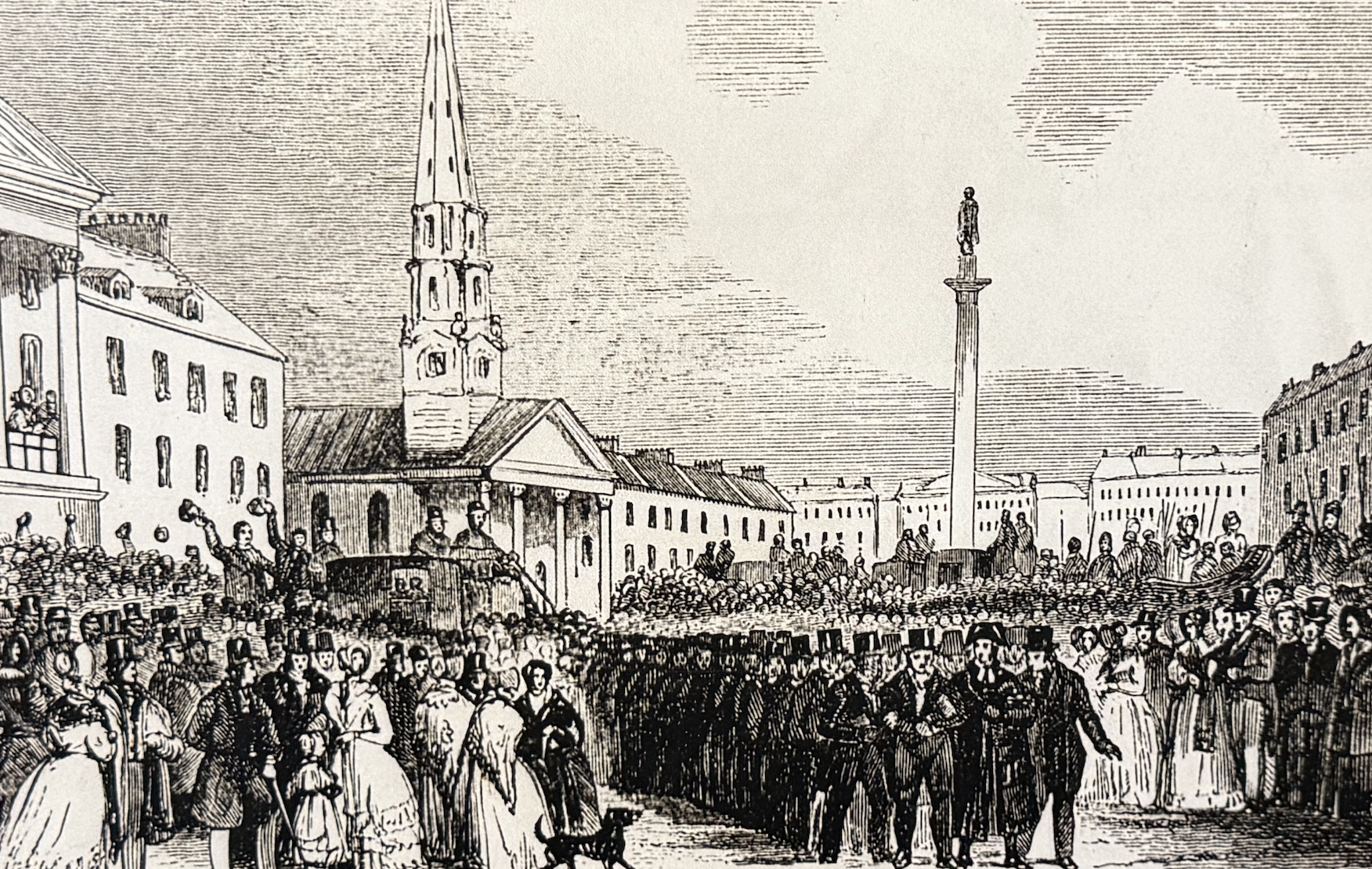
In 1843, the annual General Assembly of the Church of Scotland would take place in St Andrew’s Church, George Street and there was such an anticipation that something major would happen that many railway companies decided to double the number of trains to Edinburgh that day.
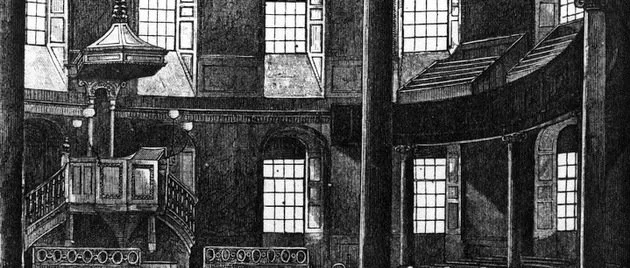
The thronging crowds in George Street were not disappointed when half of the Assembly walked out, starting a protest which led to one third of ministers leaving the Church of Scotland.
The second important date in our history is 18 May 1843. The 1840s were a turbulent time for the countries in Continental Europe, and there had been rumblings within the Church of Scotland as well, with a number of splinter churches being formed in the preceding 50 years.
The point of principle, which eventually changed the Church of Scotland as it now is, was that Parliament could not control the Church on spiritual matters, such as who should be the minister of a congregation.
When the King worships in Scotland – as he does regularly, as did the late Queen Elizabeth the Second – he does so as an ordinary member of the Church of Scotland. Whereas, when the monarch worships in the Church of England, she or he does so as the Head of the Church on Earth.
1975
A Church in the New Town
The third important point is in 1975. The ministry of the Rev Andrew Wylie was dynamic in a novel way.
The elders had begun to realise that decreasing numbers at Sunday worship in a historic building threw into question the justification for asking Presbytery to allow the Congregation to remain.
But Andrew Wylie, and his Session Clerk David Miller who had had senior corporate experience in London, persuaded the congregation to put their energies into a visionary reconstruction of parts of the building to make it a hub for engagement with the shops and offices round about it.
An Associate Minister was appointed to be a chaplain to the shops and offices in a move which associated the congregation’s commitment to the poor and disadvantaged alongside the pastoral needs and economic importance of all of those who were active in the City Centre.
Our
Architecture
The building itself has a number of distinctive architectural features to explore.
-
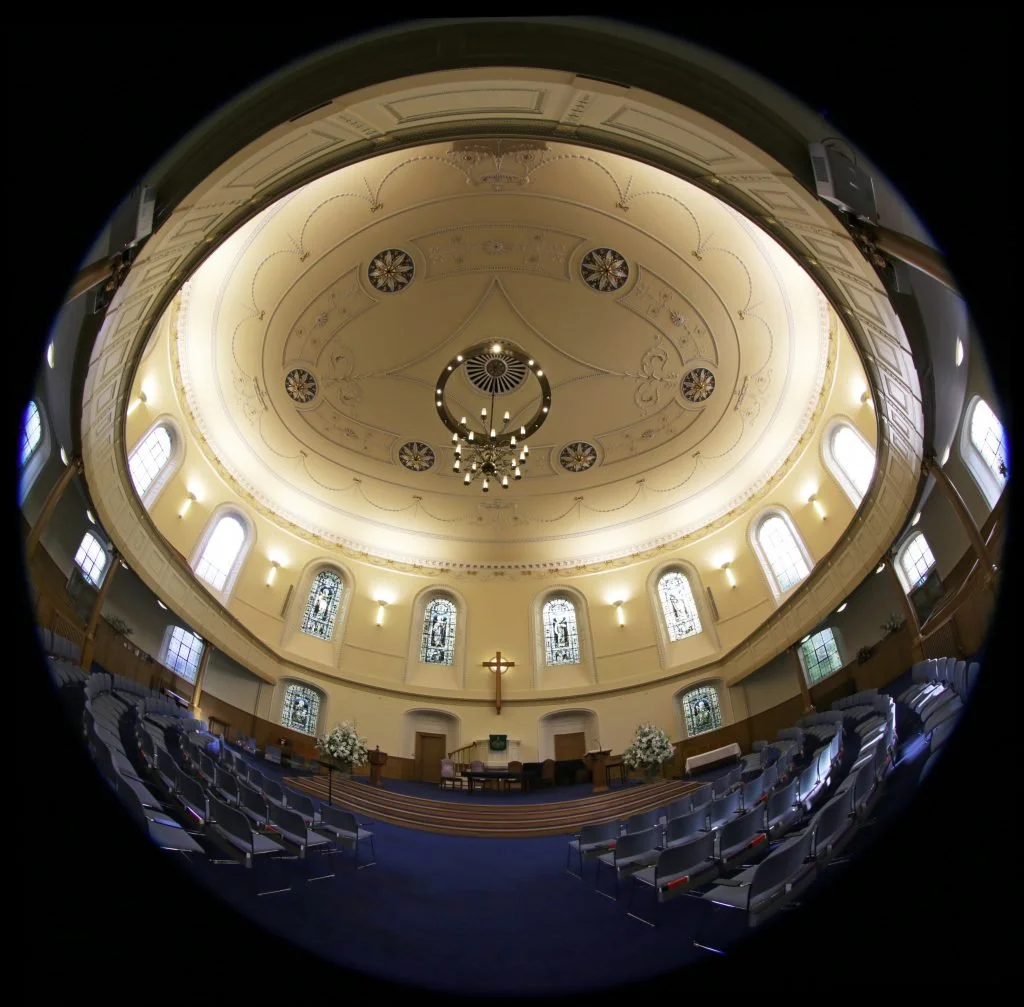
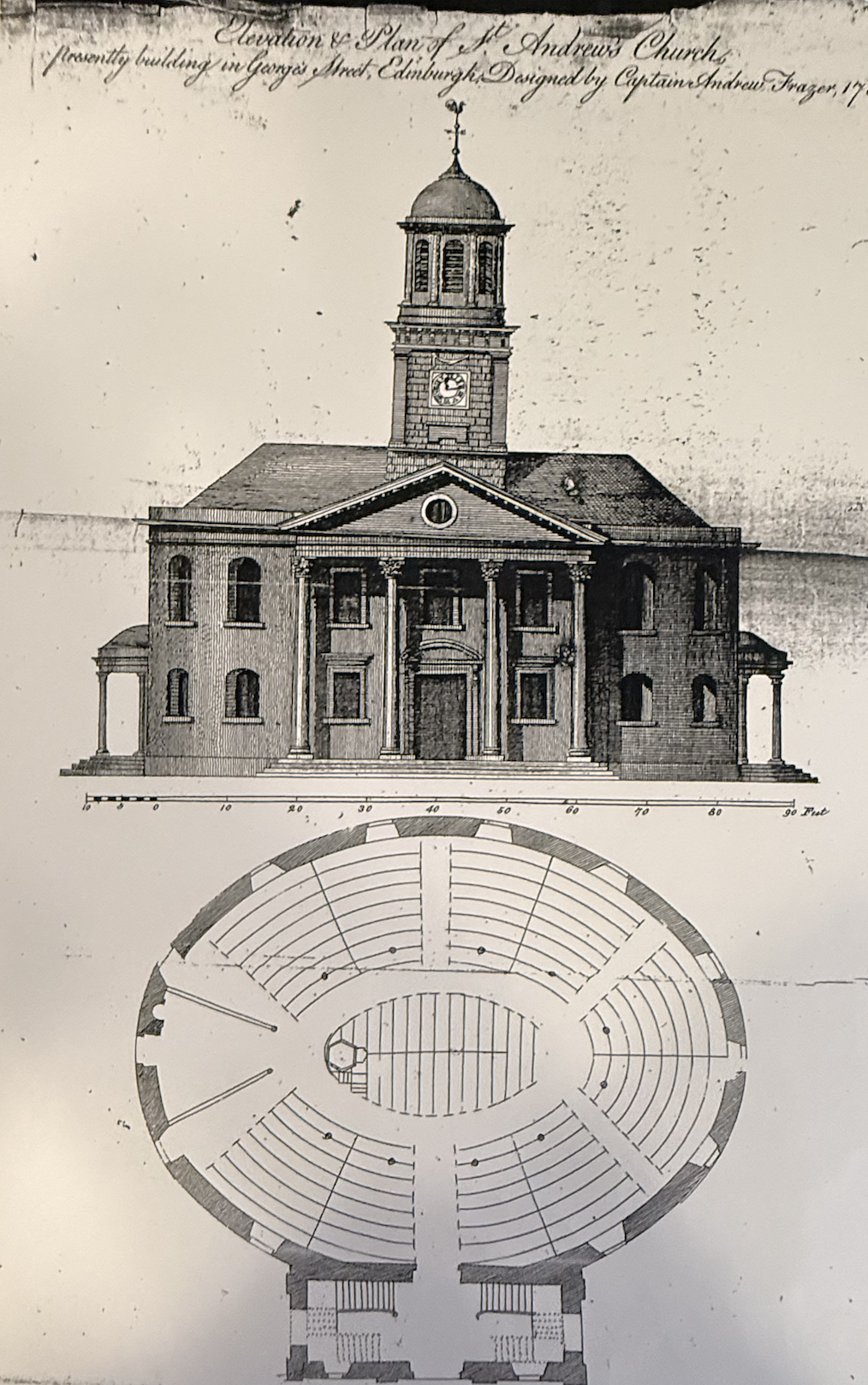
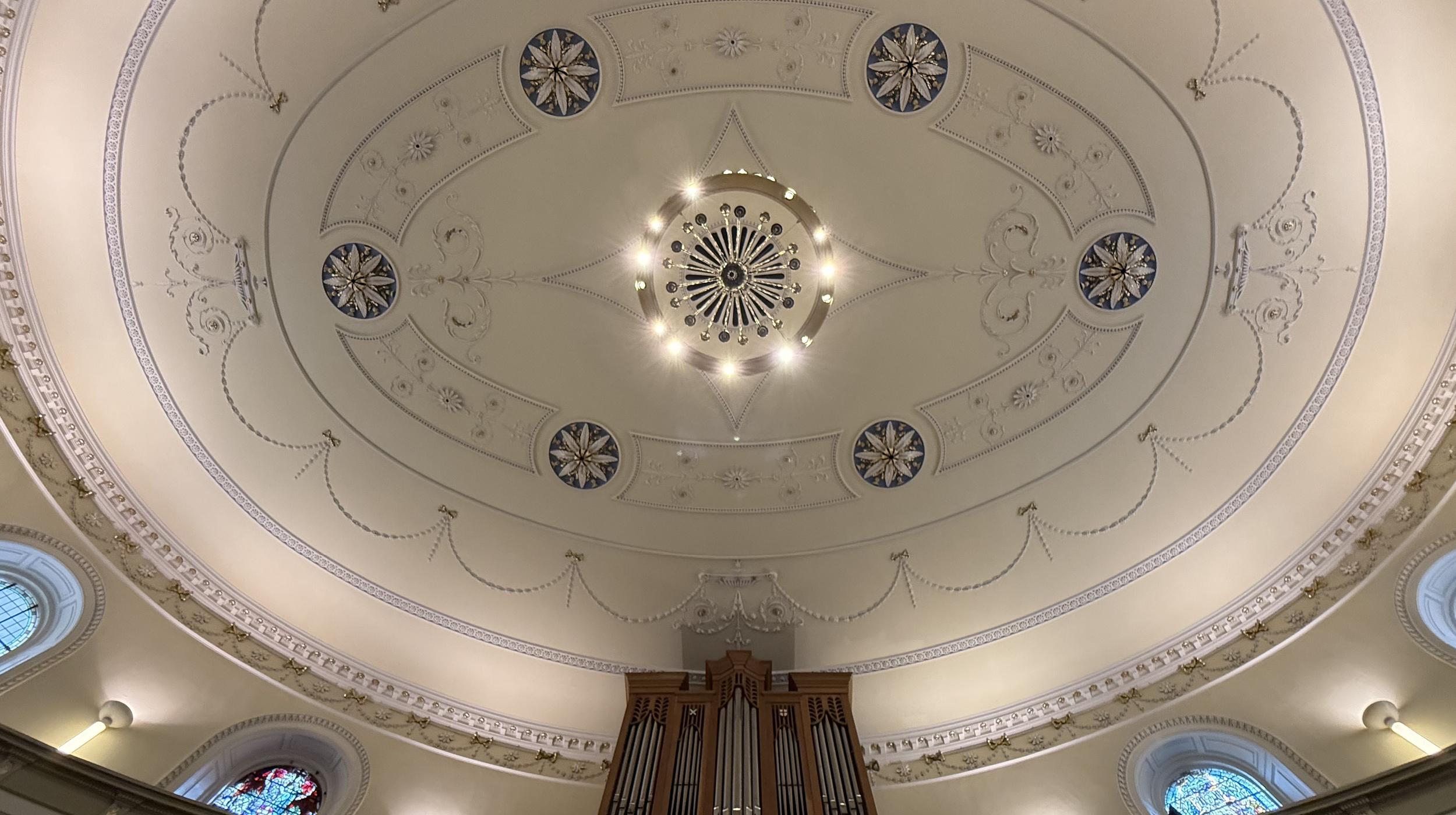
The main part of the building, which houses the Sanctuary, is an ellipse and this makes the construction quite rare for a church.
It was the first example of an elliptical plan in the UK. There is another elliptical church building in England, All Saints Presbyterian Church, Newcastle upon Tyne, built 1786–96. A few churches in Italy are based on an ellipse: Sant’ Andrea al Quirinale in Rome has an oval interior. In India, St Andrew’s, Chennai, built between 1818 and 1821, bears some initial similarity to the New Town Church.
-
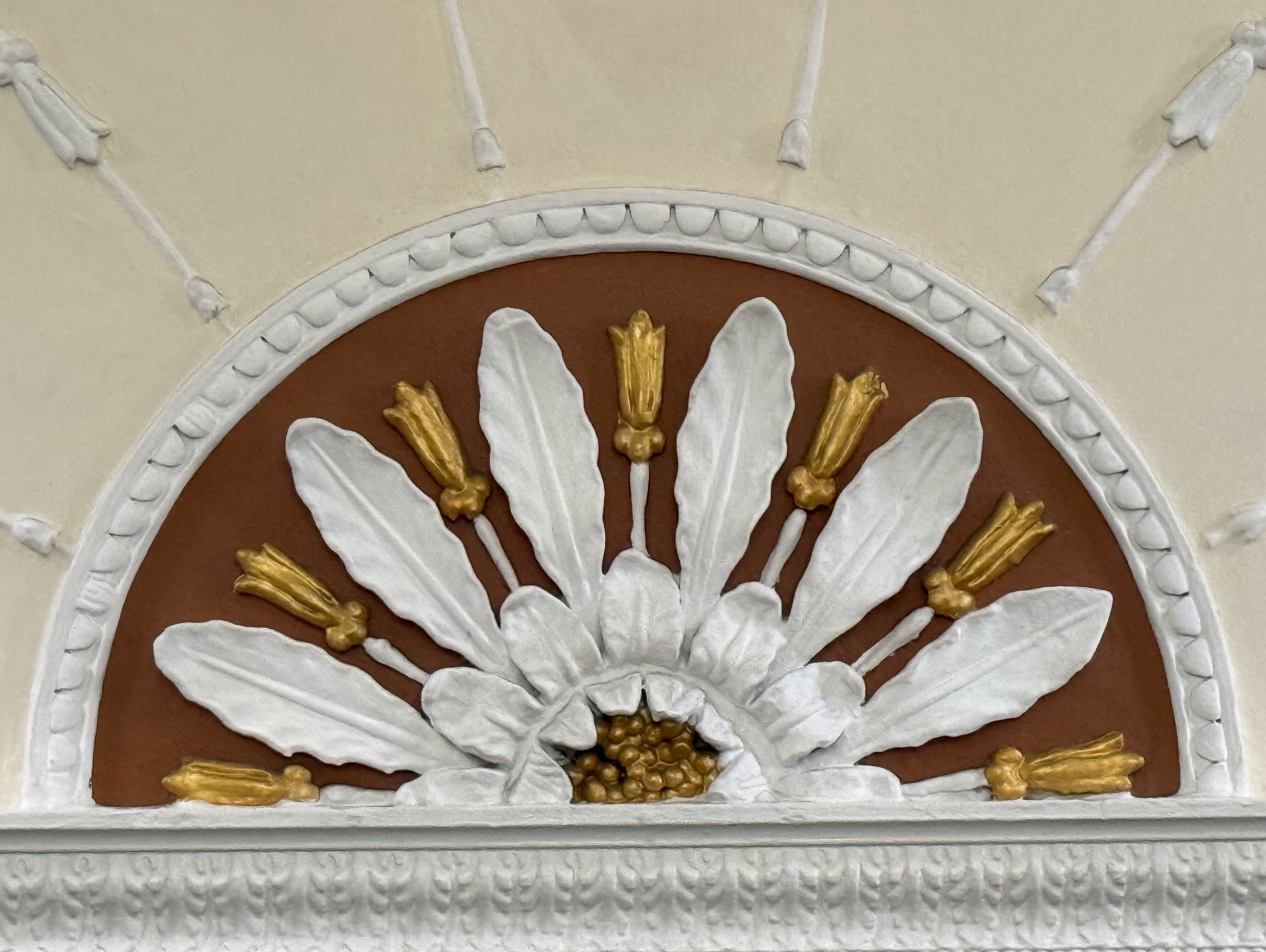
The quality of light which floods the Sanctuary is a defining feature of the building.
The New Town of Edinburgh was the first approach to planned Georgian architecture in Scotland and, as part of the Enlightenment, the church building is worlds away from the darkness and mystery of mediaeval churches.
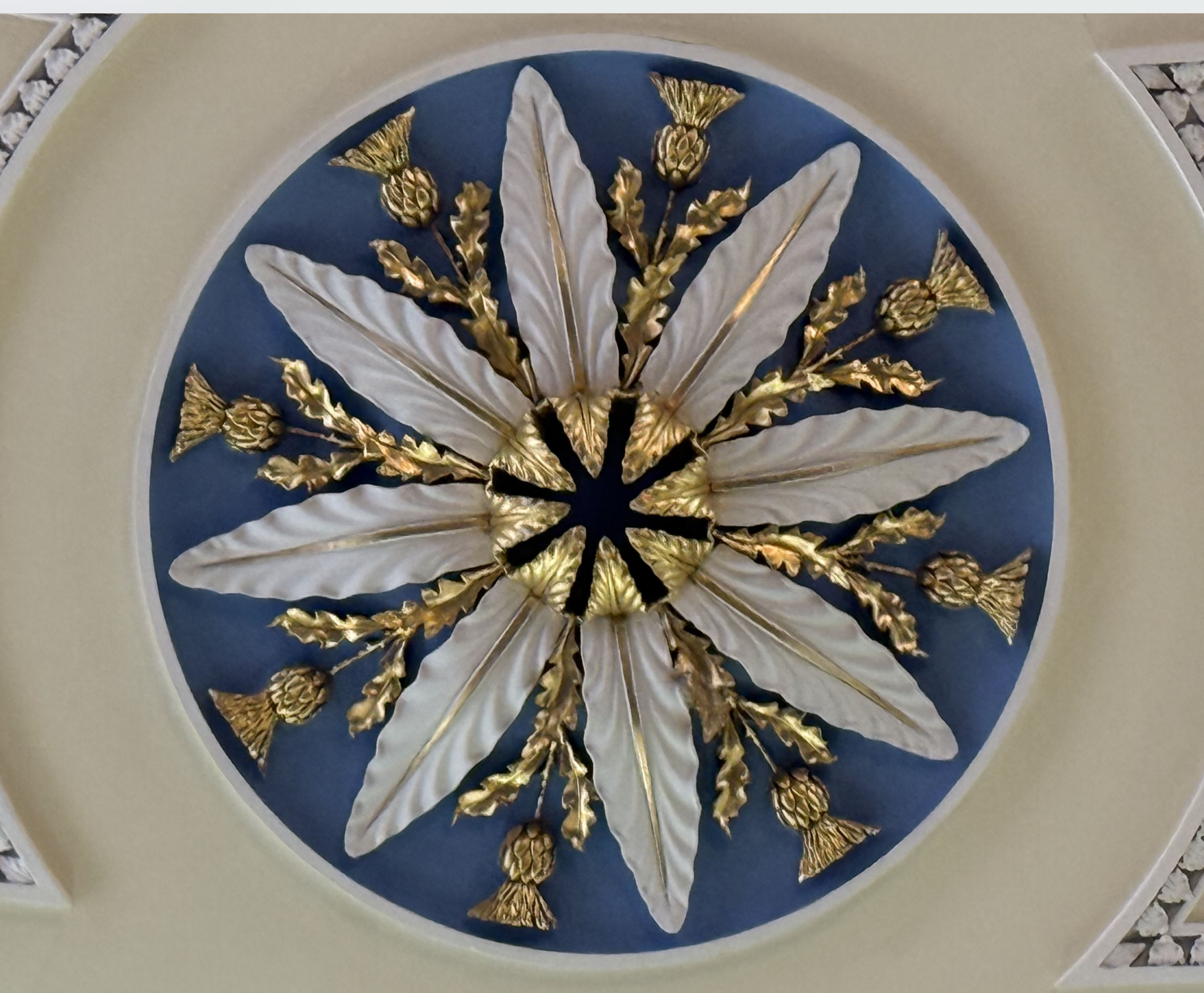
On entering the Sanctuary, with its marvellous plastered ceiling and magnificent chandelier, the C18 worshipper would have found the same elegance and light they would enjoy in their drawing room in Heriot Row or Moray Place.
-
The building’s very refined acoustic is a result of the ellipse, the height of the Sanctuary, the many windows and the plasterwork.
Because there are no straight walls, no corners, no central pillars and a combination of plaster, wood and glass, sound travels and reflects in complex ways.
As a concert space, it is particularly suited to classical music.